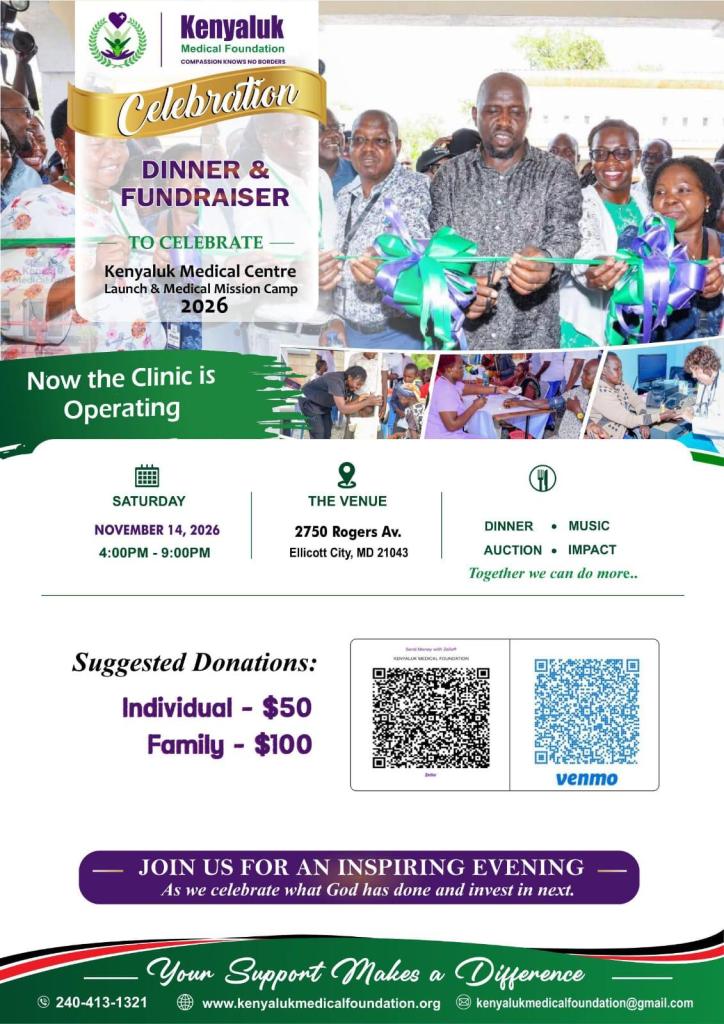
Many of you have assisted me in projects with PHARP. My association goes back to 2002. Please read and pray for their work. Dwight
-
Reflections on trip to Kenya
I have been back from Kenya for just over a week and I am not sure how to process the experience.
We had a successful grand opening to the hospital. Staff were hired and patients are now being seen.
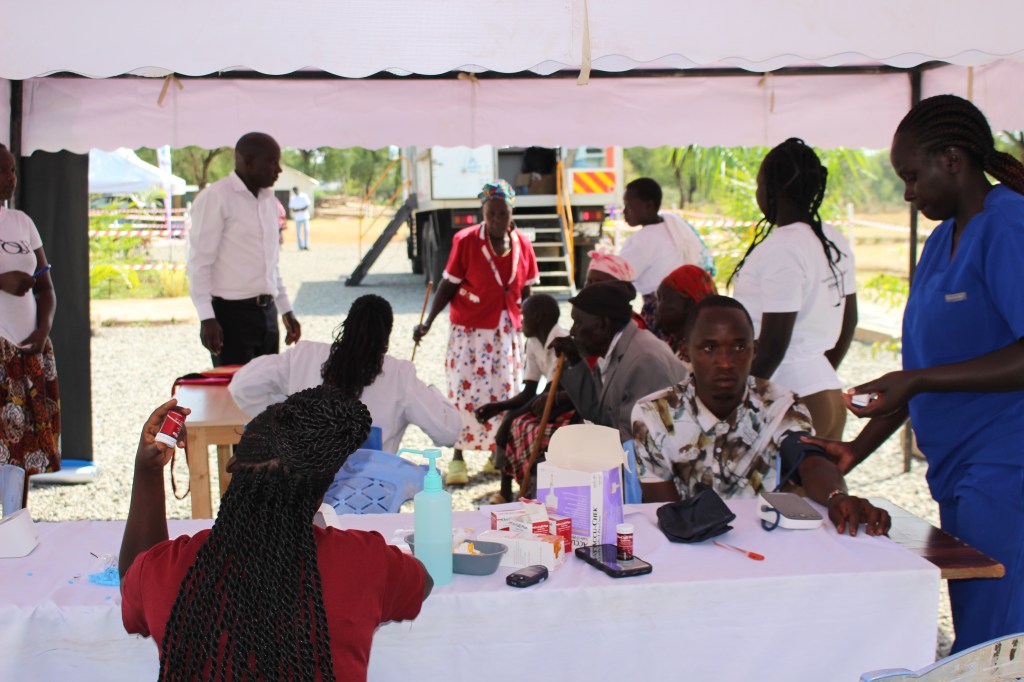
The medical camp helped more than 200 with free care.
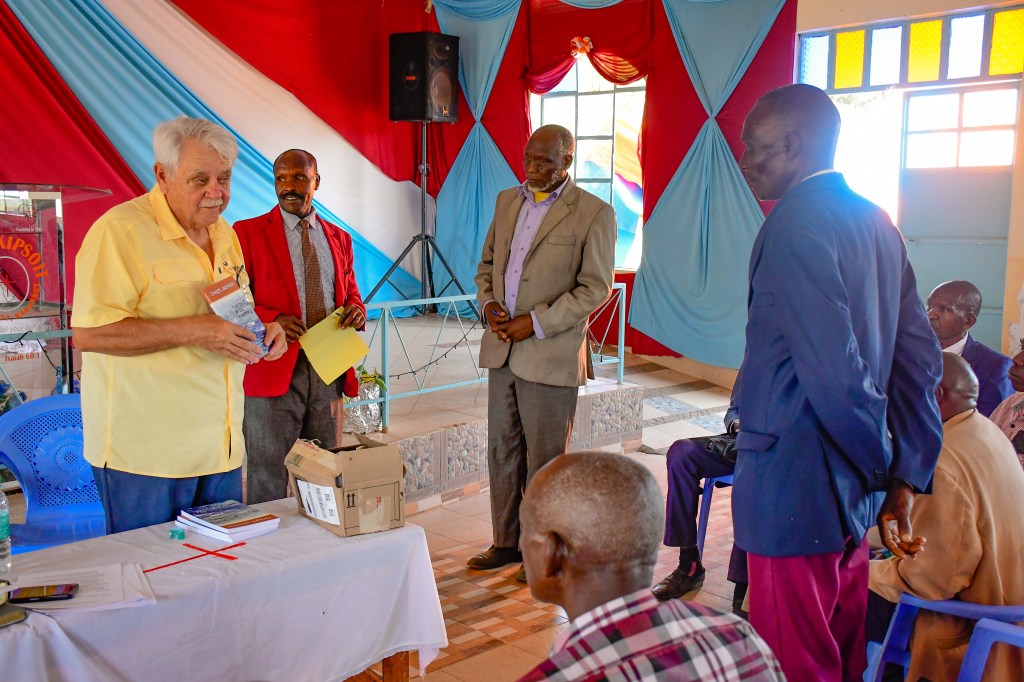
On a personal level, I was invited to preach in AIC Mumol and AIC Kipsoit, always satisfying. Trainings for men and women church leaders exceeded our expectations. I met with the religion faculty at Africa Nazarene University in Nairobi. I was asked to join the board of Peacebuilding, Healing, and Reconciliation Program (PHARP) an organization with which I have been associated since 2002.
And then there were the invitations. I was asked to consider up to 5 training programs for our next trip. These invitations are still very flattering. Not all of them will pan out even if I make the trip. The next few months will be occupied with serious consideration on the plans that I need to make.
Many of you have prayed and supported me in multiple ways over the years. Some of you have even joined me on African projects. You have my deep gratitude. Pray again that I will do what is necessary.
-
Kenya Post 3, July22
I continue to have what appears to be meaningful conversations with individuals and small groups. The topics vary from family to personal life decisions for young ministers, to how to design a community plan for development for water management, and since the conference last week on effective ministry to people by the church. I have been humbled by each interaction. Most of these were one offs, but several may develop into ongoing discussions.
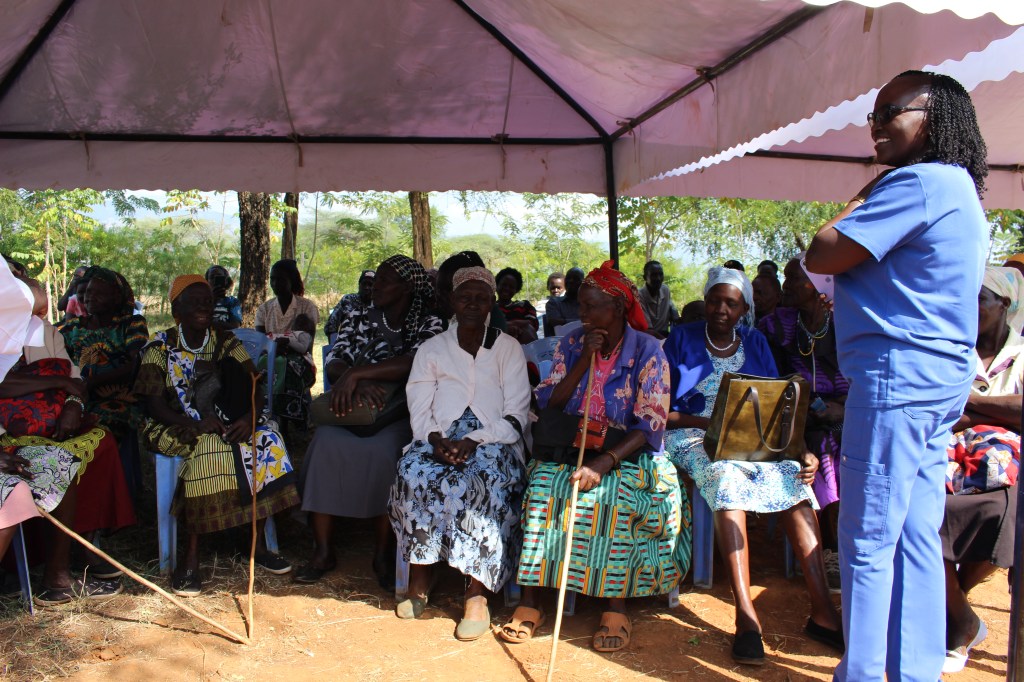
Medical camp is over. Over 200 took advantage of this opportunity for free medical attention. The range of issues, most in need of continual management, reinforce the need for this medical facility in this place.
I met the man who installed a solar electrical system for the center. It seems he heard that we had lost a shipment of vaccines. When the arrived we had no way to refrigerate them. A Kenyaluc board member took them to her home which a few days later lost power for three days. This Kenyan business man took the initiative to install this system with no upfront payment and trusting the board for payment as they raise the money because of his conviction that this project is needed. AMAZING LOCAL SUPPORT FOR THIS EFFORT!
We are meeting today with family members of the man for whom this center is named, to celebrate him and the opening of the center. Oh, by the way, sufficient staff have been hired and the Center is due to open August 2 as a Kenyan registered 3A hospital.
I continue to be grateful for you support and interest in these activities.
-
Kenya Post 2
Monday July 20
I had a busy weekend.
Friday we officially opened the Kenyaluc Medical Center as a 3a hospital. The ribbon cutting took less than 5 minutes. All of the speeches, celebrations, choirs and what not, took 6 hours. I was totally enthralled by the interaction of those present. It was hard to tell, but I would guess 700-800 were in attendance.
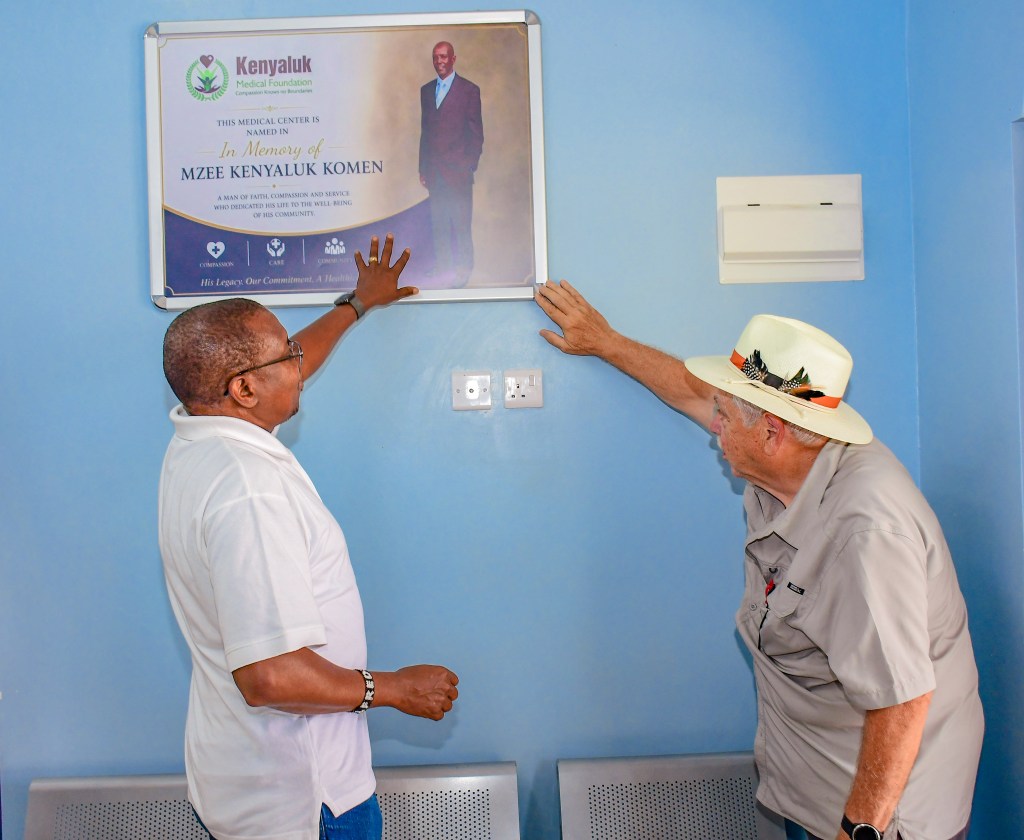
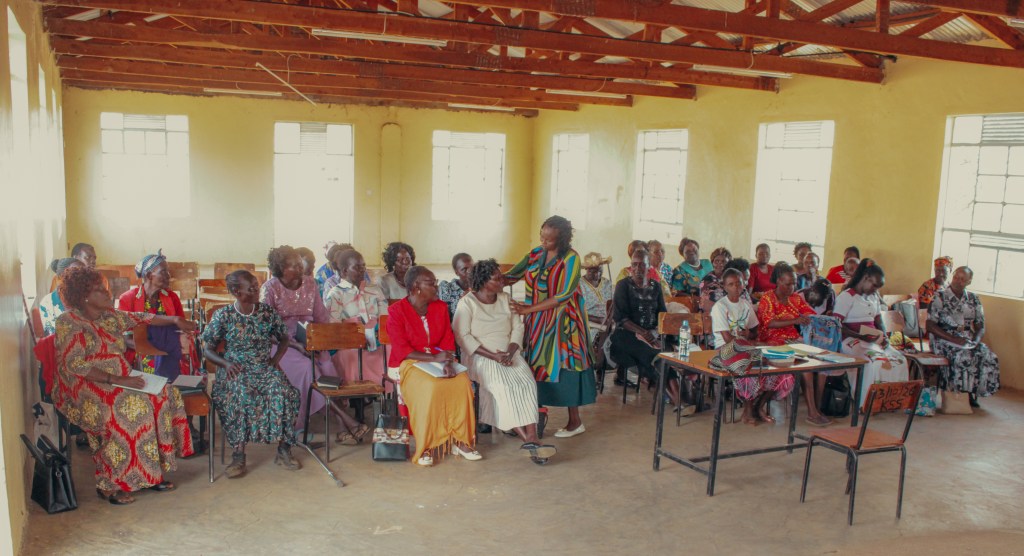
Saturday at the AIC (African Inland Church) Kipsoit our team conducted two leadership workshops. Each was all day with breaks for tea and lunch. The women explored various issues related to their roles in the family, community, and church. I led the men through discussions on the church’s role in building the kingdom of God. I am not sure if they recognized how much sociology I mixed into the Bible studies. 76 men and 54 women joined us.
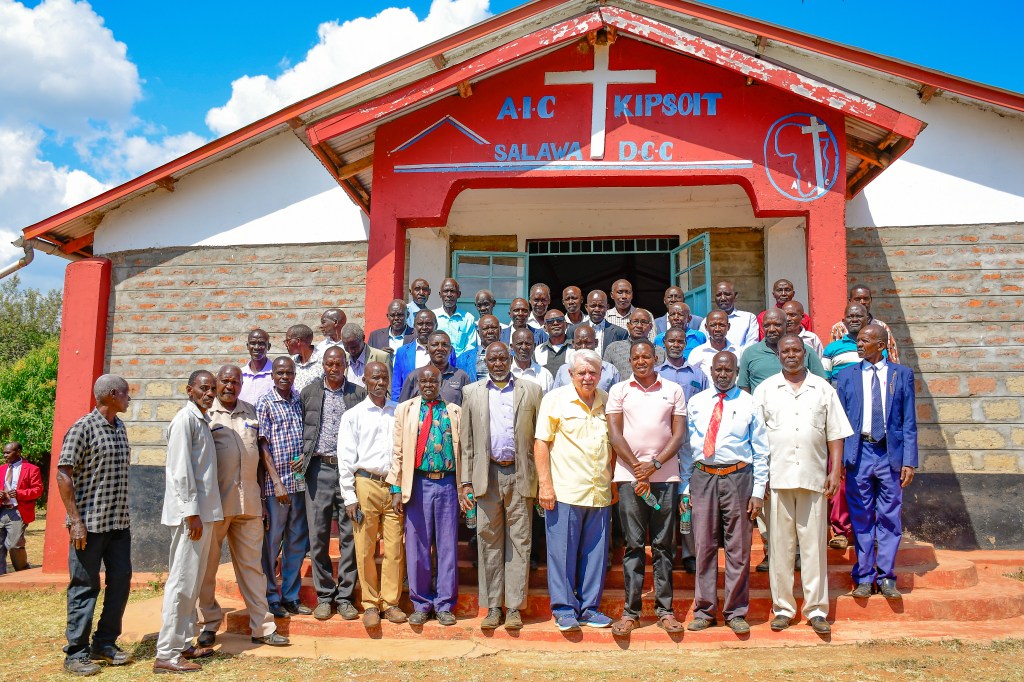
Sunday AIC Kipsoit hosted our team. For the first time since 2021 I preached for two Sundays in succession. I had a good time, I pray it was profitable for those who sat through it.
Medical Camp begins in a few hours, pray for the medical personnel, if it is like last year they will see around 500.
I will be part of a small team exploring other community needs to evaluate our ability to be of assistance.
Till next time, be well.
-
Wednesday morning I head out to Kenya.
Pray for out team, a variety of issues have reduced our number to 5. We will be working with a strong set of Kenyan volunteers, so we expect to meet our trip objectives.
Specific for me:
July 12, Preaching and leadership workshop, Kabernet
July 16, 18 Leadership workshop, Kipsoit
July 19, Preaching, Kipsoit
Other days supporting women’s training and clinics
(It’s Africa, who knows what will come along to do)I will provide updates as we go along. Thanks
-
Mission in the Valley, Baringo County, Kenya
In three weeks, July 8, I will depart for Kenya. I am part of a team sponsored by our church Crossroads Church of the Nazarene in Ellicott City, MD and the Kenyaluc Medical Foundation with Wilfred and Linet Kandie. Health is again the focal point. This year, however, the Kenyaluc Medical Center will celebrate a grand opening, and patients will be seen in the clinic every day rather than under tents. Two leadership training courses constitute our second objective. Third, members of the team will assess community needs to guide planning for future partnerships.
This is a new wineskin initiative.
These efforts represent our response to Jesus’ command to be salt and light. As a wineskin, each aspect of the mission provides opportunity for the sharing of God’s love through the gifts of all gathered. We expect knowledge, spiritual, physical, and social, to expand for participants as activities unfold. We expect healing, spiritual, physical, and social, to refresh the communities participating.
Please pray for our surrender to the Lord’s leadership during this mission.
Reflect on the condition of the wineskins to which you contribute.
Beginning the 8th, I will post updates.
God bless.
-
Jesus is a liberal
Ernst Kasemann states it this way, “For the gospels do not leave us in the slightest doubt that Jesus, judged by the standards of his religious environment, was in fact ‘liberal’, and that it was probable that very fact that sent him to the cross.”
Jesus’ liberal attitude embarrassed and shocked his followers as well as his critics. I believe this has been true throughout Christian history. As early as the Pastoral Letters, the church was abandoning his teaching. Matthew 23
8 But you are not to be called rabbi, for you have one teacher, and you are all brothers and sisters. 9 And call no one your father on earth, for you have one Father, the one in heaven. 10 Nor are you to be called instructors, for you have one instructor, the Messiah.[b] 11 The greatest among you will be your servant. 12 All who exalt themselves will be humbled, and all who humble themselves will be exalted.
Jesus pronouncements on the religious establishment in Matthew 23 reveal his liberality.
Jesus did not live and die to make us ‘better’ people, he came as Messiah to launch a new age with a new humanity. The Messianic Age brought to a conclusion the Mosaic Covenant. Jesus announced the ‘covenant of his blood’ to the disciples in the upper room.
Jesus was only able to reshape mankind’s relationship with God because he used his liberal understanding of the conditions he confronted in the world to shape his ministry and his teaching. This freedom to adopt a liberal perspective has to be a wineskin that he and his followers used to preserve the ‘new wine’ of Jesus. When we deny his liberality we abandon the liberty that he bought.
He freed us from the curse of sin.
He freed us from the compulsion of personal sin.
He set us free from the social bonds that restrict our ability to choose modes of behavior, such as those discussed in the last post, which align us with the values of righteousness, compassion and worship.
Jesus the liberal set us free. We need to claim that freedom and exercise it as a wineskin to bring his kingdom to others.
-
New Humanity: Part 2
You may be too young to remember the chorus, They will know we are Christians by our Love. Frankly, that is the only way followers of Jesus can be identified. To love God with all our being and our neighbors as ourselves is the essence of Jesus Gospel. Oh yes, love is action before it is emotion.
In the last blog I stated that Jesus gave us instructions for the behavioral patterns (institutions) that would characterize what Paul came to call the new humanity. Jesus almost aways gave examples for each teaching emphasis. First was ‘taking up our cross and following him.’ That total commitment is the prime characteristic of a follower. Other examples of behavioral patterns expected of the new humanity are:
(giving structure to the commands to love God and neighbor and establish righteousness)
Goel
The Goel was the kinsman redeemer of the Tribal League era of the Hebrews. At first he was the avenger. That role evolved into what Boaz modeled in the Book of Ruth, one responsible for others to ensure that their lives when broken were redeemed.
Almost three generations after Jesus’ resurrection John promotes the institutionalization of the kinsman redeemer among a gentile audience who knew little or nothing of the Jewish traditions.
This is my commandment, that you love one another as I have loved you. No one has greater love than this, to lay down one’s life for one’s friends. John 15: 12-13
Servant
In washing the disciples’ feet Jesus’ example was concrete and unambiguous. All their feet were dusty from the journey. Jesus assumed the responsibility to meet their needs.
Additionally, he instructed them not to create status within the community, the greatest is servant not pastor, bishop, deacon which we have turned into the very status symbols Jesus rejected.
Steward
The steward acts with responsibility for the householder. Kingdom life is responsible for the care of God’s household until Jesus returns. Kingdom subjects above others should sense the seriousness of caring for creation. In Luke 16 the steward is held accountable for his inattention. Unless we develop kingdom institutions for the care of creation, we will experience the same condemnation.
(for building fellowship with God and each other)
Worship
Worship structures our response to God’s initiatives. He has made Himself known to us inviting us to participate in the management of creation and now the redemption of the world through the Kingdom. Our worship consists of those rites and ceremonies which honor Him, communicate to others, and remind ourselves of the importance of His activity on our behalf and our relationship with Him.
The facts of worship are contextual. Worship must respond to the situation drawing people in a particular context into the presence of God.
Koinonia
The fellowship meal is likely the most persistent motif of Christian fellowship. It signifies the sharing of God’s provision for body and spirit. Today there are many Christians who will not sit down to a meal together, either physically or figuratively. Divisions are deep. These divisions mirror the social and cultural facts of the places where Christians live. Current institutions of Christian life resemble labeling theory more than the prayer of Jesus in John 17. Can the World know that Jesus launched the Kingdom if we are more concerned with pointing out the liberals or fundamentalists then we are in ‘submitting to one another’ and “Do(ing) nothing from selfish ambition or conceit, but in humility regard(ing) others as better than (ourselves)” (Phil. 2: 3).
These are examples drawn from the teaching of Jesus detailing the behavior to be expected from the new humanity made possible by the cross, his on Calvary and ours which we take up daily.
-
The New Humanity
Paul announced the reality of a new humanity created by his earthly existence. James Denney in Christian Doctrine of Reconciliation said, “The mere existence of Christ does not constitute the new humanity. It is only constituted as men in faith freely identify themselves with Him.” The faithfulness of Christ to the Father’s mission requires a life of faithfulness from us. I think Jesus provided a framework for that faith response in his teachings. I will suggest a sociological interpretation of that framework.
A new humanity will require two distinct sets of habits, often called institutions. In this blog we will begin to consider the first set social structure which is the collective memory of the group expressed in the oughts and restrictions felt by members as they make choices. In our culture these are often so habitual we never notice the choice. Forming a new humanity is different. We have to learn these preferred choices and intentionally follow them.
Jesus was very direct to instruct those of us who would choose to follow him on the structure of our new life.
The Cross: Luke 14:26-33
The cross loomed over the ministry of Jesus. He could have made choices to avoid the cross. He did not. Yes, He died on the cross for our sins. He is our kinsman redeemer. He paid the ransom for us to set us free from slavery to sin. But the cross is more. It is the symbol that the earthly life of Jesus was not His own, but rather subject to the authority of the Father. The cross is the symbol of the ‘faithfulness of Jesus’ that is so important to Paul’s theology. As Jesus acknowledged in the Garden, only the Father can change the course of the days ahead. If Jesus takes matters into His own hands He usurps the authority of the Father.
In the ‘new humanity’ the cross becomes the symbol of the radical lifestyle expectation placed on each of us, not just a special few. We are expected to demonstrate the same ‘faithfulness’ which characterized Jesus’ obedience to the Father. Every day we structure our decisions in the shadow of the cross and affirm the choice to follow Jesus with forsaking our life for His will. If you haven’t done so, read Luke 14:26-33. This is not hyperbole. Do not de-radicalize these verses.
Our opportunity to be subjects of the Kingdom and children of God was provided at great cost. If we choose it, it is ours, but then we are His. Choosing the way of the cross is placing the Kingdom before any aspect of our lives.
In the new humanity, the cross is foundational to our membership. Taking up our cross is critical to lives that honor the faithfulness of Jesus.
Paul announced the reality of a new humanity created by his earthly existence. James Denney in Christian Doctrine of Reconciliation said, “The mere existence of Christ does not constitute the new humanity. It is only constituted as men in faith freely identify themselves with Him.” The faithfulness of Christ to the Father’s mission requires a life of faithfulness from us. I think Jesus provided a framework for that faith response in his teachings. I will suggest a sociological interpretation of that framework.
A new humanity will require two distinct sets of habits, often called institutions. In this blog we will begin to consider the first set social structure which is the collective memory of the group expressed in the oughts and restrictions felt by members as they make choices. In our culture these are often so habitual we never notice the choice. Forming a new humanity is different. We have to learn these preferred choices and intentionally follow them.
Jesus was very direct to instruct those of us who would choose to follow him on the structure of our new life.
The Cross: Luke 14:26-33
The cross loomed over the ministry of Jesus. He could have made choices to avoid the cross. He did not. Yes, He died on the cross for our sins. He is our kinsman redeemer. He paid the ransom for us to set us free from slavery to sin. But the cross is more. It is the symbol that the earthly life of Jesus was not His own, but rather subject to the authority of the Father. The cross is the symbol of the ‘faithfulness of Jesus’ that is so important to Paul’s theology. As Jesus acknowledged in the Garden, only the Father can change the course of the days ahead. If Jesus takes matters into His own hands He usurps the authority of the Father.
In the ‘new humanity’ the cross becomes the symbol of the radical lifestyle expectation placed on each of us, not just a special few. We are expected to demonstrate the same ‘faithfulness’ which characterized Jesus’ obedience to the Father. Every day we structure our decisions in the shadow of the cross and affirm the choice to follow Jesus with forsaking our life for His will. If you haven’t done so, read Luke 14:26-33. This is not hyperbole. Do not de-radicalize these verses.
Our opportunity to be subjects of the Kingdom and children of God was provided at great cost. If we choose it, it is ours, but then we are His. Choosing the way of the cross is placing the Kingdom before any aspect of our lives.
In the new humanity, the cross is foundational to our membership. Taking up our cross is critical to lives that honor the faithfulness of Jesus.